For the first hundred days of pregnancy, a ewe on decent forage largely looks after herself. Then the maths changes. In the final six weeks, roughly day 105 to lambing, about 70% of fetal growth takes place, and the ewe’s requirements climb steeply while her physical capacity to eat is shrinking.
That is the whole problem in one sentence. She needs dramatically more energy at exactly the point when there is less room in her abdomen to put it. Get this wrong and you get weak lambs, poor colostrum, prolapses, and twin lamb disease. Get it right and lambing gets markedly easier.
Why the last six weeks dominate
Fetal growth is not linear. It is exponential. A fetus at day 90 is a fraction of its birth weight; by day 140 it is nearly there. Alongside the lambs, the ewe is also building the udder and manufacturing colostrum, an expensive process that happens in the final two to three weeks.
Meanwhile, the growing uterus physically compresses the rumen. Dry matter intake can fall by 20-30% in the last few weeks of pregnancy. Energy density, not bulk, becomes the lever.
Energy demand climbs sharply, and with litter size
Requirements scale with the number of lambs on board. This is why scanning matters: a triplet-bearing ewe fed as a single-bearer is being quietly starved.
| Stage | Single | Twins | Triplets |
|---|---|---|---|
| Mid pregnancy (to ~day 100) | Maintenance | Maintenance | Maintenance + |
| 6 weeks out | Modest lift | Clear lift | Substantial lift |
| 3 weeks out | Elevated | High | Highest, energy density critical |
| Last week | Elevated | High | Highest, small frequent feeds |
Actual quantities depend entirely on your forage quality, ewe size and breed, which is why the honest advice is to get your forage analysed and build a ration from real numbers rather than a figure from an article. A silage analysis is cheap and it turns guesswork into arithmetic.
Group by scan result
If you do one thing after reading this, do this one.
- Empty: cull or manage separately. Do not feed them a pregnancy ration.
- Singles: maintenance-plus. The genuine risk here is over-conditioning, which brings oversized lambs and difficult births.
- Twins: the standard step-up.
- Triplets and above: highest energy density, best forage, most trough space, earliest into the shed.
Feeding a mixed group to the average means the singles get fat and the triplets get thin. Both outcomes cost you.
Protein matters more than people think
Energy gets the attention, but metabolisable protein in late gestation drives colostrum quantity and quality, and it drives lamb birth weight. Cutting protein to save money in the last month is a false economy, you will pay for it in bottle-feeding.
Look for a compound feed with a protein source of good quality and, ideally, some degree of rumen bypass protein (soya, protected rapeseed, etc.) in the final weeks. Cheap cereal-heavy feed delivers energy but leaves the colostrum thin.
Trough space and feeding frequency
Two practical constraints that quietly wreck good rations:
- Trough space. If shy ewes cannot reach the trough, the ration is irrelevant. Allow enough linear trough space for every ewe to feed at once, a crowded trough means the boldest ewes eat twice and the thinnest eat nothing.
- Feeding frequency. As intake capacity falls, split concentrate feeds into two (or more) meals per day rather than one large one. Large single feeds of cereal also risk acidosis. Two smaller feeds are better for the rumen and better for the ewe.
Body condition score: the free diagnostic
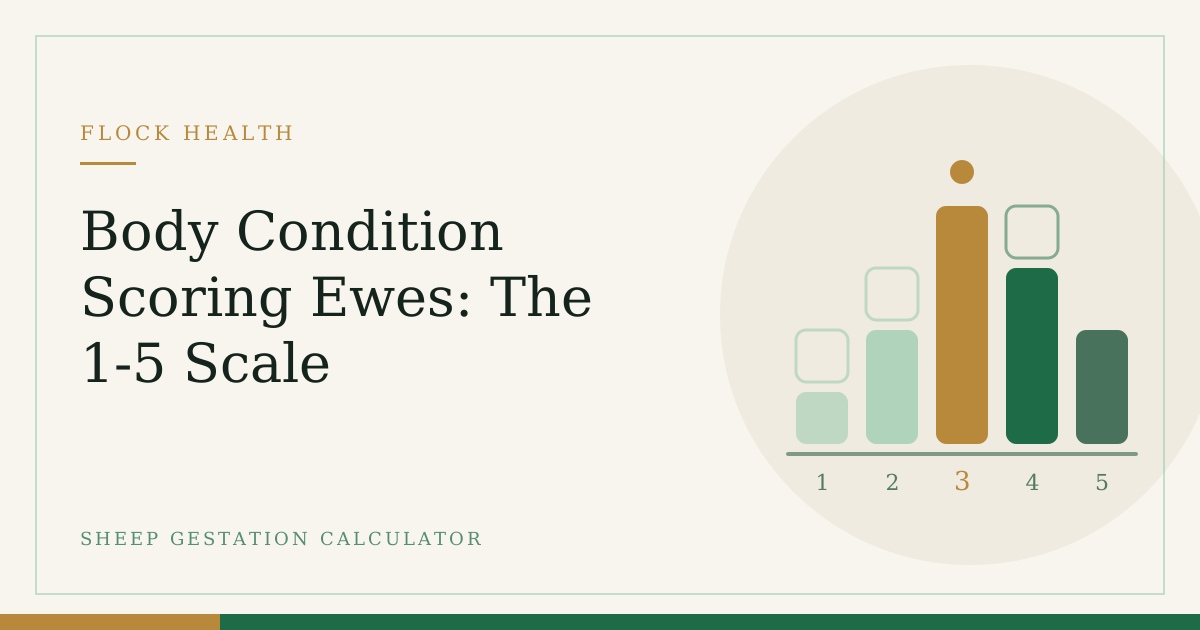
Forget the ration sheet for a moment and put your hands on the ewes. BCS (scored 1-5, assessed over the loin) is the most honest feedback you have.
- Target at lambing: roughly 2.5-3.0 for lowland ewes, a shade lower for hill breeds.
- Score at scanning, then again three weeks before lambing.
- If ewes are losing condition in late gestation, your ration is short. Act immediately, you have weeks, not months.
- If they are gaining heavily, back off; fat ewes lamb badly.
Do not attempt to correct thin ewes with a crash feeding programme at day 135. Late, rapid energy loading does not fix six weeks of deficit and can create its own problems.
Twin lamb disease (pregnancy toxaemia)
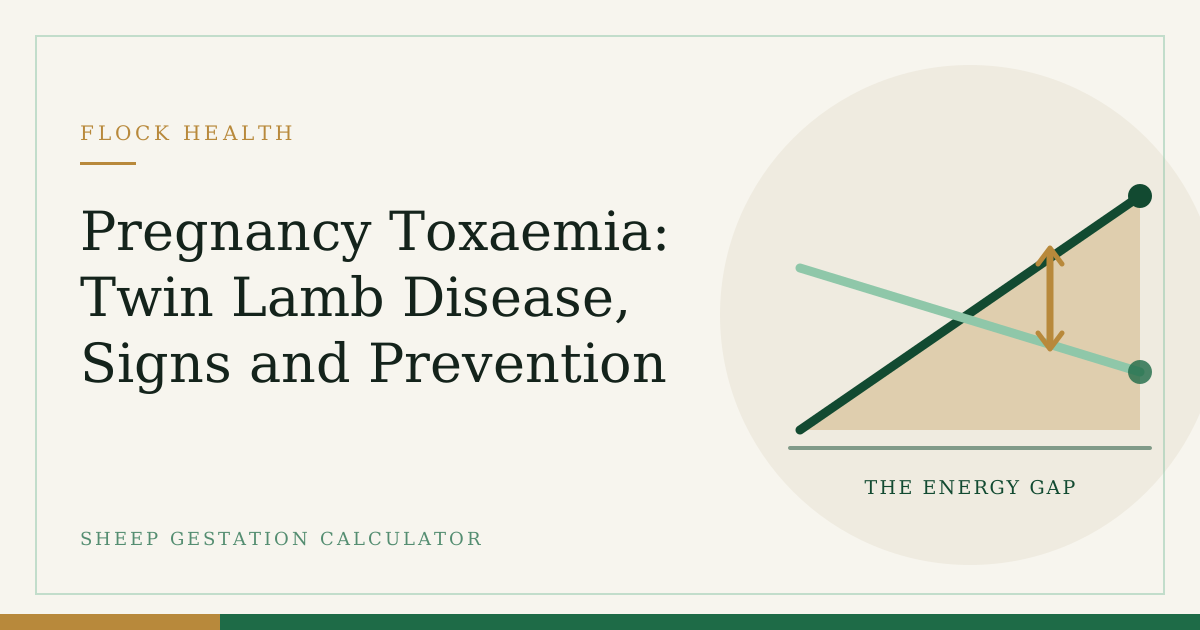
This is the failure mode that late-gestation nutrition exists to prevent. When a ewe’s energy intake falls short of demand, she mobilises body fat, and ketones accumulate faster than she can clear them.
Highest risk: ewes carrying multiples; over-fat ewes; very thin ewes; ewes subjected to a sudden feed interruption, a snowfall, a lameness episode, a day off feed for handling, a bullied ewe at the trough.
Signs to watch for: separation from the group, dullness, apparent blindness or unresponsiveness, star-gazing, staggering, going down.
Prevention:
- Never interrupt feed in the last six weeks. Not for a day.
- Treat lameness promptly, a lame ewe cannot compete at the trough.
- Provide adequate trough space.
- Feed to condition, checking with your hands, not with hope.
Twin lamb disease is far easier to prevent than to treat, and a ewe showing neurological signs is a same-day veterinary call, not a wait-and-see.
Minerals and the trace elements that matter
Late gestation is when specific deficiencies show up as lamb losses.
- Selenium and vitamin E, deficiency is linked to weak lambs and white muscle disease.
- Iodine, deficiency causes goitre, stillbirths and weak lambs; brassica-heavy diets increase the risk.
- Cobalt, copper: copper in particular is genuinely dangerous to over-supplement in sheep, and some breeds (Texel especially) are more susceptible to copper toxicity. Never add copper without veterinary advice.
Local soils vary enormously. Base supplementation on a blood or forage test and your vet’s advice, not on a bag that looks reassuring.
Building the timeline
Work back from the expected lambing date. The Sheep Gestation Calculator gives you day 105 and the six-week mark for each service date, which is when the step-up begins.
- Day ~100-105: begin increasing the plane of nutrition; group by scan result.
- Day ~117 (4 weeks out): clostridial booster; ration at full rate.
- Final 3 weeks: peak energy and protein density; split feeds; watch shy feeders.
- Final week: small, frequent feeds; do not change the diet abruptly.
This article is general husbandry guidance, not veterinary advice. Rations, mineral supplementation and any suspected metabolic disease should be discussed with your vet or nutritionist.
Plan your lambing dates: use the free Sheep Gestation Calculator to turn a breeding date into an expected lambing date, a 142–152 day window and a full milestone timeline. Estimates only, always consult a veterinarian for animal-health decisions.