Pregnancy toxaemia, twin lamb disease, ketosis of ewes, is a metabolic disease of late gestation. It is one of the most common causes of ewe death in the final weeks before lambing, and it is almost entirely a management disease. Once a ewe is clinically affected, treatment is difficult and outcomes are often poor. Prevention, by contrast, is well understood and mostly comes down to feed and body condition.
What is happening inside the ewe
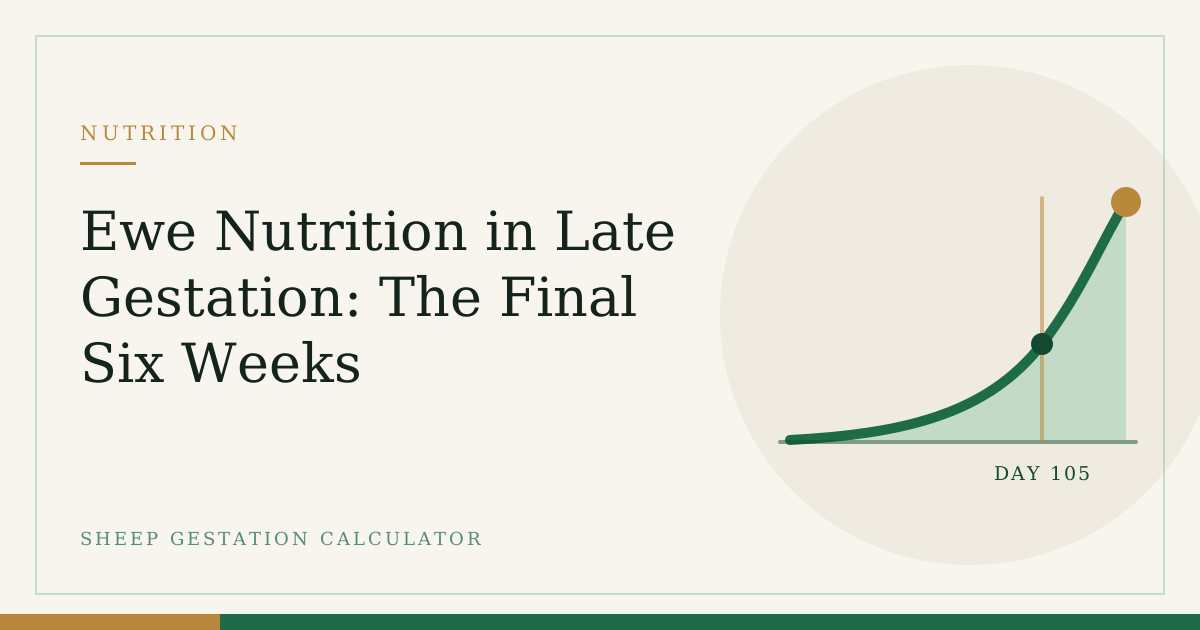
In the last six weeks of gestation, the lambs grow explosively, roughly 70% of fetal growth happens in that period. At the same time, the growing uterus physically compresses the rumen, so the ewe can eat less just as her energy requirement peaks. A ewe carrying twins needs substantially more energy than a single-bearing ewe; a triplet-bearing ewe more again.
If she cannot take in enough energy, she starts breaking down her own body fat to make up the shortfall. The liver converts that fat into ketone bodies. In moderation this is normal. When the deficit is large and prolonged, ketones accumulate faster than the ewe can use them, blood glucose falls, the brain is starved, and the ewe becomes ill. Left unchecked, liver damage and death follow.
Who gets it
The risk profile is remarkably consistent:
- Ewes carrying twins, triplets or more, the greater the fetal load, the greater the energy demand.
- Over-fat ewes (BCS 4+), they mobilise fat readily, have reduced rumen capacity, and often eat less.
- Thin ewes (BCS below 2.5), no reserves to draw on.
- Ewes in the last 6 weeks of gestation, the window is essentially days 100-147.
- Any ewe subjected to a sudden interruption in feed intake, a snowstorm, a day of gathering, a housing move, a transport journey, a lame ewe who cannot get to the trough, a bully-heavy feed face with too few spaces.
- Ewes with concurrent disease, lameness, severe parasitism, bad teeth, fluke.
The classic case is a good, well-grown, twin- or triplet-bearing ewe in fair-to-fat condition who missed two days of feed.
Recognising it
Signs develop over several days and are neurological as well as metabolic. Early recognition is everything, because treatment success falls sharply once the ewe is recumbent.
Early signs:
- Separating from the flock; slow to come to the trough.
- Dull, listless, off her feed.
- Apparent blindness, she walks into fences, gates, feeders.
- Standing still, head down, unresponsive when approached.
Progressing signs:
- Muscle twitching, especially of the face and ears; teeth grinding.
- Star-gazing, head pressing, circling, incoordination.
- A sweet, acetone-like smell on the breath.
Late signs:
- Recumbency, unable to rise.
- Coma, then death.
Ketones can be detected in urine or blood, and vets can measure blood beta-hydroxybutyrate (BHB) to confirm the diagnosis and, importantly, to screen apparently healthy ewes in the same group. If one ewe is clinical, others are usually subclinical.
Twin lamb disease can look like hypocalcaemia (milk fever), listeriosis or other conditions. Get a diagnosis, hypocalcaemia responds dramatically to calcium and can also be present at the same time.
If you suspect a case
Call your vet promptly. Treatment is a veterinary decision and typically involves rapidly available energy, correction of dehydration and electrolyte imbalance, and a decision about whether to induce or deliver the lambs, because removing the fetal demand is often the only way to break the cycle. Do not attempt to treat a down ewe by feed alone, and do not delay: outcomes for recumbent ewes are poor.
Just as important, treat the case as a flock alarm. Review the group’s feeding immediately.
Prevention
Prevention is a feeding and condition plan, executed on time.
1. Manage body condition all year
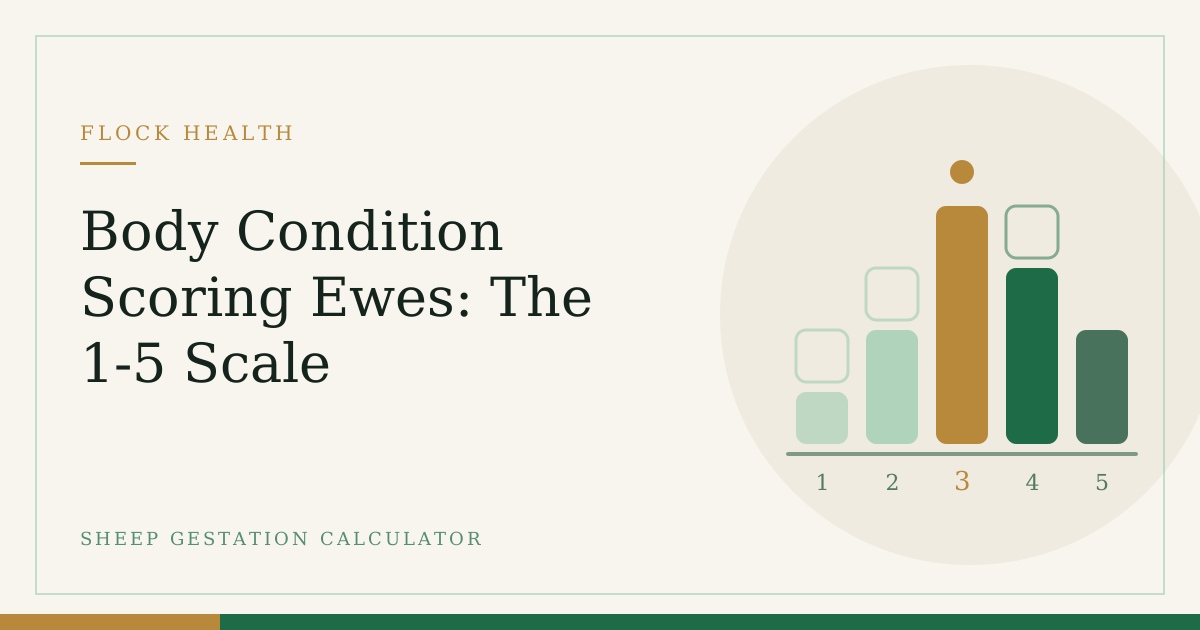
Target BCS 3.0 at lambing for lowland ewes (2.5-3.0 for hill ewes). Avoid ewes arriving at late gestation over-fat, and avoid letting them slide thin. Condition takes 6-8 weeks to change by one score, so this begins at weaning, not in February.
2. Know your lambing date
The step-up in nutrition has to start about six weeks before lambing, roughly day 100-110. Gestation averages 147 days, with a normal range of 142-152. Put your tupping dates into the Sheep Gestation Calculator to work out exactly when day 100 falls, so the ration changes before the demand does, not after.
3. Scan and feed to litter size
This is the single most effective intervention available. Scanning at day 45-90 lets you separate singles, twins and triplets and feed each group to its actual requirement. Feeding a flock average starves the triplets and fattens the singles.
| Group | Late-gestation energy demand | Management |
|---|---|---|
| Single | Baseline | Modest supplementation; watch for over-fat |
| Twins | Noticeably above single | Step up from ~day 100 |
| Triplets+ | Highest | Earliest step-up, best forage, most trough space |
| Thin ewes (any litter) | Elevated risk | Draft out and feed separately |
4. Protect intake
- Trough space for every ewe at once, otherwise shy ewes simply do not eat. Allow generous linear space; do not force competition.
- Feed little and often as concentrate levels rise, rather than one large meal.
- Provide good-quality forage, a low-quality hay or straw simply cannot be eaten in sufficient quantity by a ewe with no rumen room.
- Never starve pregnant ewes, even for a day. If ewes must be gathered, housed, moved or handled, keep it short and get them back to feed.
- Introduce dietary changes gradually over 10-14 days.
5. Remove the other brakes
Lame ewes cannot reach the trough. Ewes with poor teeth cannot chew. Heavily parasitised or fluke-affected ewes lose condition regardless of intake. Fix these before the last six weeks, not during them.
The short version
Twin lamb disease is what happens when a ewe’s energy demand outruns her energy intake at the worst possible moment. Scan, draft, condition score, feed to litter size from day 100, keep feed in front of them without interruption, and act on the first dull, blind-looking ewe rather than the third.
Work out your day 100 and your lambing window with the Sheep Gestation Calculator, and build the ration around it.
This article is general husbandry guidance, not veterinary advice. For decisions about a specific animal or flock, speak to your vet.
Plan your lambing dates: use the free Sheep Gestation Calculator to turn a breeding date into an expected lambing date, a 142–152 day window and a full milestone timeline. Estimates only, always consult a veterinarian for animal-health decisions.