Every ewe contributes half the genetics of one lamb crop. The ram contributes half the genetics of all of them, and he is also the single point of failure that can turn a whole season into an empty shed. Yet rams routinely get less attention in the eight weeks before tupping than the ewes get in a fortnight.
Tupping is not simply a matter of opening a gate. It is a planned six-week block with a preparation phase, a ratio decision, a marking system and a set of dates that you will rely on right through to lambing.
Preparing the ram: start eight weeks out
Sperm takes about two months to produce and mature: roughly seven weeks of production plus a further one to two weeks of maturation. Anything that knocks a ram, illness, lameness, heat stress, a sudden diet change, can show up in his fertility weeks later. That is why ram preparation begins two months before you need him.
Work through the five Ts:
- Toes, feet trimmed, sound, no lameness. A lame ram will not work, however fertile he is.
- Teeth, a ram who cannot eat cannot hold condition through six weeks of hard work.
- Testicles, firm, even, freely moving in the scrotum, with no lumps or hard spots. Scrotal circumference correlates with sperm output; bigger is generally better within a breed.
- Tone, body condition score around 3.5-4.0 at ram-in. He will lose a full score or more during tupping.
- Treat, vaccinations up to date, worming and fluke treatment as your health plan dictates, and quarantine any bought-in ram properly before he joins the flock.
A veterinary fertility examination, a physical check plus semen assessment, is money well spent, especially on a single-ram flock or on a ram working his first season. Do it eight to ten weeks out, so you still have time to buy a replacement. What owners can check themselves, and what a vet’s exam involves, is covered in the ram breeding soundness exam guide.
Ram-to-ewe ratios
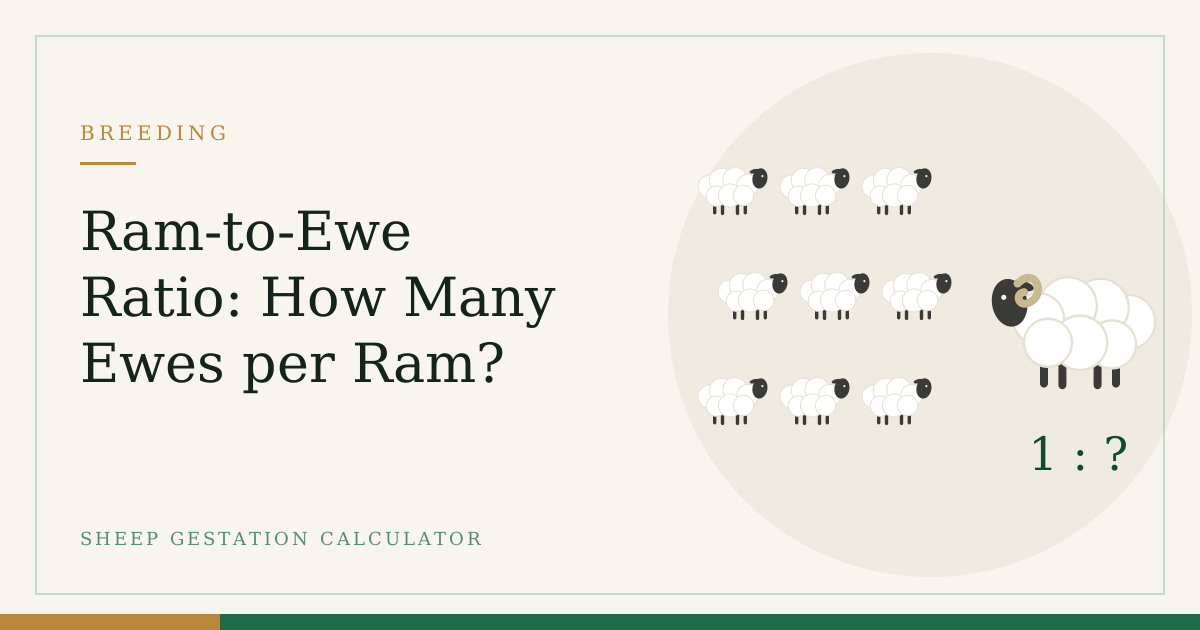
There is no single correct ratio; it depends on the ram’s age, the terrain, the length of the mating period and whether the ewes have been synchronised. As a starting point, many farm flocks use one mature ram per roughly 35 to 50 ewes and one ram lamb per roughly 15 to 25, with far more ram power for synchronised ewes.
Two principles matter more than the exact number. First, synchronised ewes need far more ram power, because the whole group comes into heat at once. Second, never run a single ram alone with a large group, if he is subfertile, you find out at scanning, and by then it is too late. Sourced ranges for different ram types and systems are in the ram-to-ewe ratio guide.
Teasers and the ram effect
Ewes exposed to rams after a period of complete isolation from males will often cycle earlier and more tightly. This is the ram effect, and it is a useful, cheap tool at the start of the breeding season.
In outline: keep ewes out of sight, sound and smell of rams for at least four weeks, run teasers with them for about 14 days, then put fertile rams in before the heat peaks at around days 17 to 19 and 24 to 26. It works best just before the natural breeding season and has little effect once ewes are already cycling. Timings, teaser numbers and limitations are covered in the ram effect guide.
Raddle and crayon marking: the system that saves lambing
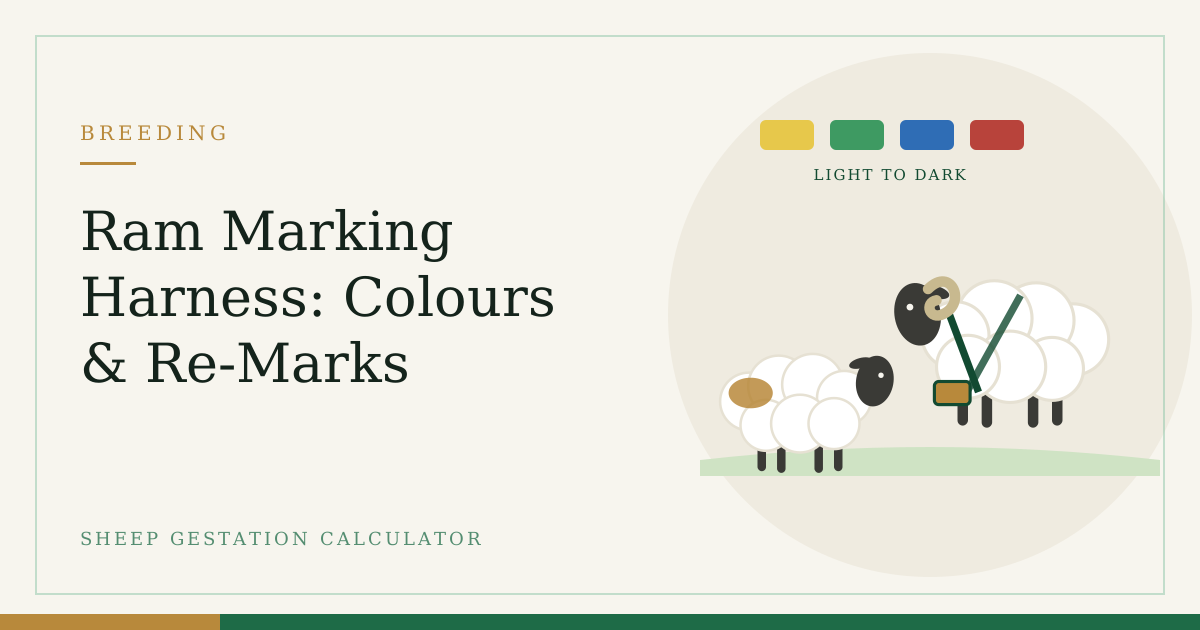
A ram wearing a marking harness with a coloured crayon, or dressed with raddle paste on the brisket, leaves a colour on the rump of every ewe he serves. This is the highest-value fifteen minutes of work in the whole tupping period.
What it gives you:
- A service date for every ewe, and therefore an accurate lambing date. Feed those dates into the Sheep Gestation Calculator to get an expected lambing date and the 142-152 day window around the 147-day average.
- Lambing groups. Ewes marked in the same colour period lamb around the same time.
- An early fertility warning. If a large proportion of ewes carry a second mark, they returned to service, which usually means a ram problem, not a ewe problem. Investigate immediately rather than waiting for scanning.
- A cull list. Ewes never marked at all, or marked repeatedly, are flagged before you spend a winter feeding them.
Change colours on a fixed schedule, light to dark, and record marks as you go. Fitting, crayon grades, colour-change intervals and how to read re-marks are covered in the ram marking harness guide.
Length of the tupping period
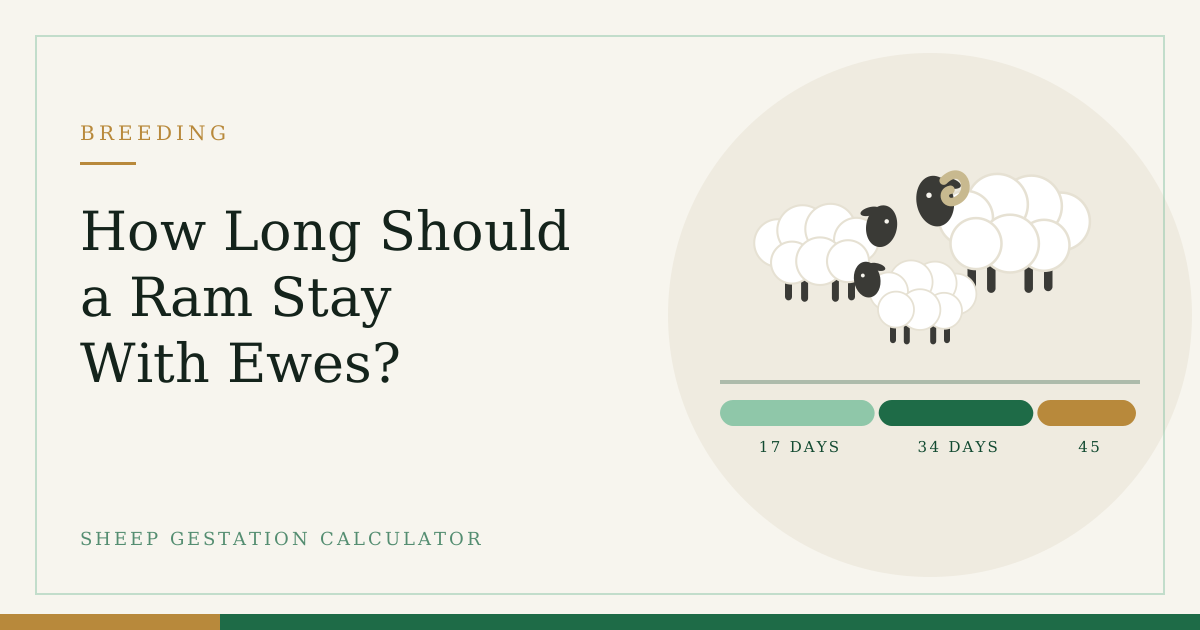
Most flocks run rams for about two cycles, 34 to 35 days. Lambing then lasts roughly the length of the joining plus about ten days, so around five to six weeks. Longer joinings catch more stragglers but stretch lambing accordingly, and beyond about six weeks the extra ewes caught rarely justify the longer lambing.
Tight blocks concentrate labour, make batch feeding straightforward and produce an even lamb crop. They also demand more ram power and better ewe condition. The trade-offs between 17, 34 and 45-day joinings are explained in how long a ram should stay with ewes.
During and after tupping
- Check rams every few days. Look for lameness, loss of condition, an empty crayon holder, or a harness rubbed raw. Swap crayons before they run out.
- Watch for a ram who has stopped working. If ewes are cycling and nothing is being marked, act.
- Feed the rams. They will run themselves down hard. Offer supplementary feed if grass is short.
- Minimise stress after ram-out. Avoid heavy handling, long transport and abrupt feed changes in the first three weeks, when embryo losses are most likely.
- Record everything. Ram identity, group, colour changes and dates. Those records are the foundation of the entire lambing plan.
Get the ram right, get the ratio right, raddle him, and the rest of the year becomes a matter of arithmetic. Put your recorded service dates into the Sheep Gestation Calculator and you will know when to scan, when to vaccinate, when to step up feed and when to be in the shed.
This article is general husbandry guidance, not veterinary advice. For decisions about a specific animal or flock, speak to your vet.
Plan your lambing dates: use the free Sheep Gestation Calculator to turn a breeding date into an expected lambing date, a 142–152 day window and a full milestone timeline. Estimates only, always consult a veterinarian for animal-health decisions.